Raising Cane’s vs Dave’s Hot Chicken: Calories Compared
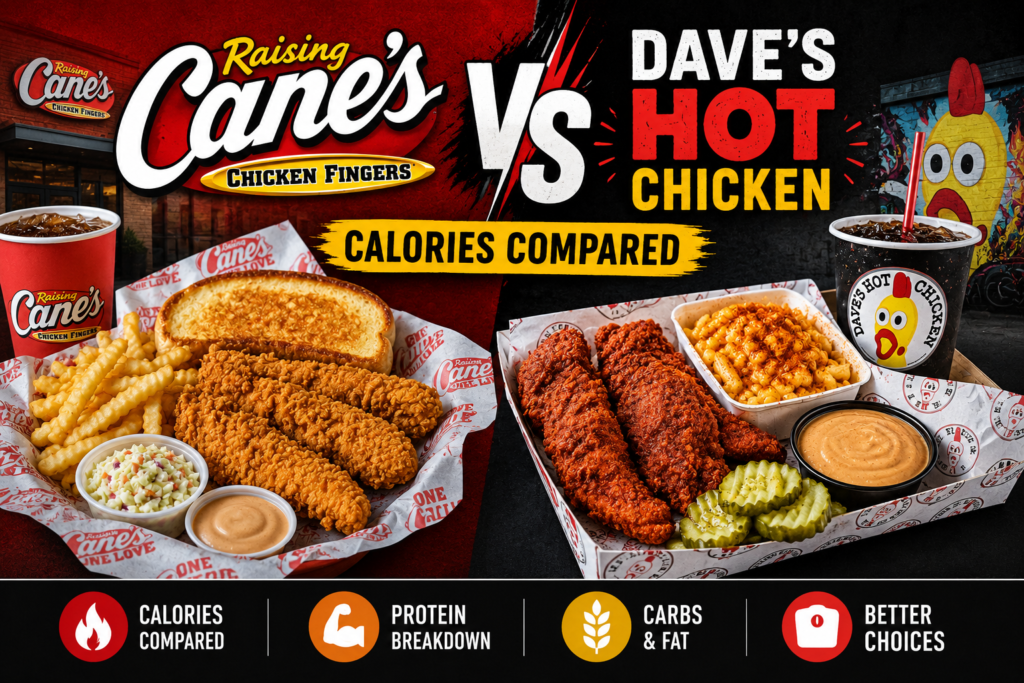
The battle for the ultimate fast-food chicken crown has a new matchup. For years, Raising Cane’s has dominated the game with its simple, ultra-consistent chicken fingers and signature dipping sauce. But recently, Dave’s Hot Chicken has rapidly expanded, bringing heavy Nashville-style heat, massive portions, and intense spices to chicken lovers everywhere.
If you are a fan of both chains but also need to keep an eye on your daily fitness or diet goals, choosing between them isn’t just about flavor—it’s also about the numbers. In this guide, we will break down the calorie counts at both restaurants, compare their popular meals side-by-side, and see which one handles your macro tracking better.
The Calorie Breakdown: Raising Cane’s
Raising Cane’s keeps its menu incredibly streamlined, focusing purely on deep-fried chicken fingers and classic southern sides. Because their frying process and item sizes are highly standardized, the calorie profile remains predictable every single time you order.
Here is what the standard menu items look like individually:
- Chicken Finger (1 piece): 130 calories
- Crinkle-Cut Fries (Regular): 390 calories
- Texas Toast: 150 calories
- Cane’s Sauce (1.5 oz cup): 190 calories
- Coleslaw: 100 calories
When most people visit, they opt for the iconic Box Combo (4 fingers, fries, toast, slaw, and one sauce). Without a sugary drink, this entire setup lands at roughly 1,250 to 1,300 calories. It is an incredibly filling meal, but the heavy reliance on carbs and deep-fried batter means you consume a massive chunk of your daily energy budget in one sitting.
The Calorie Breakdown: Dave’s Hot Chicken
Dave’s Hot Chicken approaches things differently. Their chicken portions are significantly larger, hand-breaded, and finished with a unique oil-and-spice dipping process to lock in the heat levels, which range from No Spice to Reaper.
Because of the massive tender sizes and the oil rub, the baseline calories for individual items are much higher than Cane’s:
- Single Dave’s Chicken Tender: 490 to 550 calories
- Single Dave’s Chicken Slider: 620 to 680 calories
- Crinkle-Cut Fries (Regular): 440 calories
- Dave’s Sauce (Single Cup): 180 calories
As you can see, just a single tender from Dave’s packs nearly four times the calories of a single Cane’s finger because of its size, thick batter, and oil coating. Because Dave’s items are handmade and portions fluctuate, eyeballing your numbers can easily cause you to overeat. To keep your fat loss or muscle building goals completely accurate, tracking exact Dave’s Hot Chicken calories using a dedicated online calculator is the most reliable way to custom build your meal before pulling up to the drive-thru.
Head-to-Head Meal Comparison
Let’s look at how a standard combo meal from each restaurant compares when stacked up directly against each other.
| Feature | Raising Cane’s (The Box Combo) | Dave’s Hot Chicken (Combo #1) |
| Main Protein | 4 Chicken Fingers | 2 Spicy Chicken Tenders |
| Included Sides | Fries, Toast, Slaw, 1 Sauce | Fries, 2 Slices of Bread, Pickles, 1 Sauce |
| Total Calories | ~1,250 Calories | ~1,230 to 1,350 Calories |
| Protein | ~40g to 45g | ~56g to 60g |
| Total Fat | ~68g | ~78g |
Note: While both combo meals land in a very similar 1,200 to 1,300 calorie range, Dave’s Hot Chicken provides significantly more protein per combo because their individual tenders contain much more physical chicken meat.
Crucial Nutritional Differences
Aside from the raw caloric totals, there are hidden factors that set these chicken chains apart: sodium content, spice levels, and ingredient safety.
- The Sodium Spike: Both options are incredibly high in sodium, but Raising Cane’s spreads it out across the seasoned fries, toast, and marinade, totaling over 2,000mg for a Box Combo. Dave’s Hot Chicken can easily match or exceed this, as the spice rubs contain heavy amounts of salt to balance the heat.
- Does Spice Add Calories? At Dave’s, your choice of spice level can slightly alter the calorie load. A “No Spice” tender sits around 490 calories, while the “Reaper” version creeps up closer to 550 calories. Higher heat levels require more oil-dipping for the dry spices to stick properly to the crust. Cane’s, having no spice options, keeps its calories completely static.
- Navigating Food Allergies: When you are eating out, calorie counting often takes a back seat to food safety. Both restaurants deep-fry their chicken, which creates a high risk for cross-contamination. If you have sensitivities to dairy, soy, or wheat, reviewing a full Dave’s Hot Chicken allergen menu is an essential step before you visit, ensuring you avoid hidden ingredients in the buns or the signature sauce.
How to Order Smart at Both Spots
If you want to enjoy your favorite chicken cheat meal without completely ruining your diet tracking, you can easily save hundreds of calories at both chains with simple swaps:
Smart Tweaks at Raising Cane’s
- The No-Toast Swap: Trade your Texas Toast or fries for an extra side of coleslaw. This simple adjustment trims down your carbs and cuts out up to 150 calories.
- Go Light on Sauce: Cane’s sauce is incredibly calorie-dense (190 calories). Limiting yourself to half a tub instantly saves you nearly 100 calories.
Smart Tweaks at Dave’s Hot Chicken
- Ditch the Sliced White Bread: Dave’s serves their tenders over a slice of bread that absorbs excess oil. Leaving that bread in the box saves you an easy 80 calories.
- Order Tenders instead of Sliders: Choosing a raw tender over a slider saves you the massive calorie hit of the potato bun, internal slaw, and pre-applied sauce.
The Final Verdict
If your main priority is predictable tracking and a lighter baseline item, Raising Cane’s makes it easier to keep things moderate—especially if you drop a side item or choose a smaller 3-finger combo.
However, if you are looking for a massive protein hit to fuel muscle recovery after a heavy workout, Dave’s Hot Chicken wins on sheer protein density, provided you have the calorie room to handle the extra fats from their frying and oil-coating process. Whichever you choose, planning your macro limits ahead of time ensures you can satisfy your cravings without losing control of your health journey.